Smart Gadgets: How Sensors and AI Enhance Everyday Devices
Gadgets are compact technical devices designed to simplify specific tasks, provide additional information or bring new digital functions into everyday life. They include smartwatches, fitness trackers, wireless headphones, smart rings, cameras, household devices, electronic toys, wearables and mobile assistance systems.
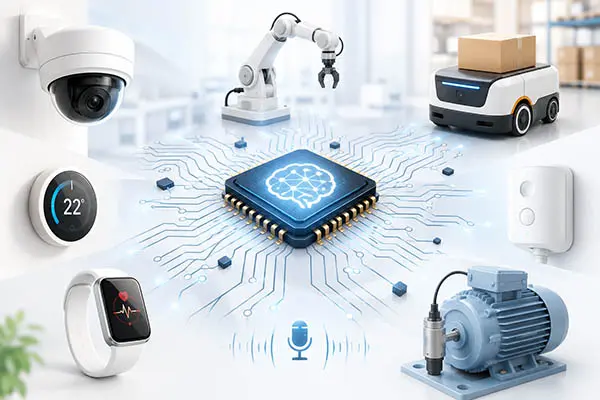
Many modern gadgets combine sensors with artificial intelligence. Sensors capture movement, sound, light, temperature, body data or device position. AI models analyse this information and use it to generate functions, recommendations or automatic responses.
This transforms simple electronic devices into systems that can perceive their surroundings, identify usage patterns and adapt to people and situations.
What Is a Gadget?
The term gadget usually describes a compact technical product with a specific or particularly practical function.
Typical examples include:
smartwatches,
fitness trackers,
smart rings,
wireless headphones,
action cameras,
e-readers,
smart speakers,
tracking tags,
portable translators,
smart thermostats,
connected kitchen devices,
electronic toys,
health and wellness devices.
The boundary between gadgets and conventional consumer electronics is not always clear. A gadget is often characterised by its compact design, connectivity, ease of use and focus on a clearly defined application.
Why Are Sensors So Important for Gadgets?
Sensors create the connection between the device and the physical world.
Without sensors, a gadget could respond only to direct user input. With sensors, it can recognise what is happening around the device or to the person using it.
A fitness tracker can count movement. Wireless earbuds can detect whether they are being worn. An action camera can stabilise video using motion data. A smart ring can monitor sleep and activity patterns.
Typical sensors used in gadgets include:
accelerometers,
gyroscopes,
optical sensors,
microphones,
temperature sensors,
pressure sensors,
proximity sensors,
ambient-light sensors,
magnetometers,
position sensors,
heart-rate sensors,
skin-conductance sensors,
environmental and air-quality sensors.
Many devices combine several sensor types.
What Role Does Artificial Intelligence Play?
Sensors initially provide only measurement values.
A smartwatch, for example, detects movement, pulse patterns or changes in temperature. Data processing and AI convert these signals into information that users can understand.
AI can help to:
classify movement,
estimate sleep stages,
recognise sounds,
process speech,
improve images,
detect unusual patterns,
learn user habits,
adjust settings automatically,
generate recommendations.
The device therefore does more than react to a single measurement. It interprets relationships between several signals.
How Do Sensors and AI Work Together?
The basic process is similar in many gadgets.
1. Sensors Capture Data
The device measures movement, light, sound, temperature, position or biological signals.
2. The Data Is Prepared
Measurements are filtered, smoothed, synchronised or summarised.
3. An Algorithm or AI Model Analyses the Data
The model identifies patterns, events or operating states.
4. The Device Generates a Function
It displays information, changes a setting or sends a notification.
5. New Sensor Data Verifies the Result
The system can continue adapting its behaviour.
A wireless earbud may detect that it has been removed from the ear. Playback pauses automatically. When the earbud is inserted again, playback resumes.
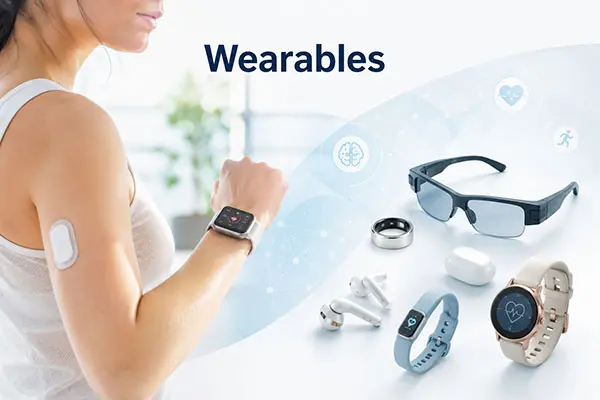
Wearables as Sensor-Rich Gadgets
Wearables are worn directly on the body and can therefore collect data continuously.
They include:
smartwatches,
fitness bands,
smart rings,
smart glasses,
sensor patches,
smart clothing,
sports and health devices.
Depending on the product, they may measure:
steps,
movement,
heart rate,
skin temperature,
blood oxygen saturation,
sleep behaviour,
physical strain,
location,
environmental conditions.
AI models attempt to derive higher-level information from these signals.
Examples include:
activity detected,
sleep stage estimated,
workout started automatically,
unusual pulse pattern identified,
recovery status assessed.
The quality of these results depends on sensor accuracy, wearing position and the underlying algorithm.
Accelerometers and Motion Detection
Accelerometers are among the most common sensors in mobile gadgets.
They measure movement along several spatial axes.
Typical applications include:
step counting,
gesture recognition,
fall detection,
display rotation,
activity recognition,
image stabilisation,
game control,
sleep analysis.
AI can distinguish between different movement patterns.
A system may recognise whether a person is:
walking,
running,
cycling,
sitting,
climbing stairs,
exercising.
Accuracy can improve when accelerometer data is combined with information from gyroscopes, position sensors or heart-rate sensors.
Gyroscopes and Orientation
Gyroscopes measure rotational movement.
They are used in:
smartphones,
drones,
virtual-reality headsets,
cameras,
game controllers,
wearables.
Together with accelerometers, they help determine the orientation and movement of a device.
In a VR headset, for example, these signals ensure that the virtual scene changes in line with the movement of the user’s head.
Optical Sensors
Optical sensors use light for measurement and detection.
They are widely used in consumer gadgets.
Heart-Rate Measurement
Smartwatches and fitness trackers illuminate the skin with small LEDs.
An optical sensor measures changes in reflected light associated with blood flow.
The device uses this signal to estimate heart rate.
Proximity Detection
Headphones and smartphones can detect whether an object or part of the body is nearby.
Ambient-Light Measurement
Displays adjust their brightness automatically according to the surrounding light.
Object Recognition
Camera systems identify faces, objects, animals or scenes.
Microphones and Acoustic AI
Microphones are important for more than calls and audio recording.
Combined with AI, they can analyse and classify sounds.
Typical applications include:
voice control,
noise reduction,
translation,
alarm detection,
environmental analysis,
automatic volume adjustment,
hearing assistance.
Wireless headphones may use several microphones to capture surrounding noise.
An algorithm generates a counter-signal that reduces unwanted sound. This process is known as active noise cancellation.
AI can also distinguish speech from background noise and improve voice clarity.
Cameras and AI-Based Image Processing
Cameras are among the most capable sensors in consumer gadgets.
AI is used for:
automatic scene recognition,
face and eye detection,
image stabilisation,
background blur,
night photography,
noise reduction,
automatic exposure,
object tracking,
text recognition.
Many image improvements result not only from the camera optics but also from computational image processing.
Several images may be combined to improve detail, dynamic range or sharpness.
Smart Headphones
Modern headphones combine several sensors.
These may include:
microphones,
accelerometers,
proximity sensors,
touch sensors,
optical sensors,
temperature sensors.
Possible AI functions include:
adaptive noise cancellation,
automatic pause detection,
speech enhancement,
personalised sound profiles,
translation,
recognition of the acoustic environment.
A headset may distinguish whether the user is in a quiet room, on a train or on a busy street.
It can then adjust noise cancellation and transparency settings automatically.
Smart Rings
Smart rings are particularly compact wearables.
Depending on the model, they may measure:
movement,
pulse,
skin temperature,
sleep duration,
activity,
recovery.
Their main advantage is unobtrusive use and continuous skin contact.
The main engineering challenge is fitting sensors, battery and wireless technology into a very small space.
AI evaluates the measurements over longer periods and identifies individual patterns.
Tracking Tags and Positioning
Tracking tags help users locate objects.
Depending on the system, they may use:
Bluetooth,
ultra-wideband,
motion sensors,
wireless networks,
proximity measurement.
The position is not always determined directly through satellite navigation. In many systems, a nearby smartphone detects the tag and transmits its location securely through a network.
AI may analyse movement patterns or typical locations and send an alert when an object has been left behind.
Smart Cameras and Security Gadgets
Compact cameras and door sensors are used for monitoring and notifications.
AI functions may distinguish between:
people,
animals,
vehicles,
parcels,
general movement.
This is intended to reduce unnecessary alerts.
Simple motion detection may react to every shadow or moving branch. An AI model can classify the scene more accurately.
These systems are particularly sensitive from a privacy perspective because they capture image and movement data.
Health and Wellness Gadgets
Many gadgets focus on fitness, wellbeing and personal health monitoring.
Examples include:
smart scales,
sleep sensors,
blood-pressure monitors,
posture trainers,
relaxation devices,
breathing trainers,
smart thermometers.
Sensors collect biological or body-related data. AI attempts to identify trends and deviations.
It is important to distinguish between wellness functions and medical devices.
Not every measurement from a consumer gadget is suitable for diagnosis or treatment. Users should therefore check the intended purpose and regulatory status of the product.
Sports Gadgets
Sports gadgets combine sensing with movement analysis.
They are used in:
running,
cycling,
swimming,
golf,
tennis,
strength training,
winter sports.
Sensors measure speed, acceleration, body movement or position.
AI can derive:
movement sequences,
repetitions,
technical errors,
training loads,
performance development.
A sensor attached to a racket or shoe can analyse movement patterns and provide feedback on technique.
Gadgets in the Home
Compact household devices also use sensors and AI.
Examples include:
robot vacuum cleaners,
smart kitchen scales,
air purifiers,
irrigation systems,
automatic pet feeders,
intelligent thermostats.
A robot vacuum uses cameras, distance sensors and motion data for navigation.
AI helps it identify rooms, distinguish obstacles and plan cleaning routes.
An air purifier measures particles or air quality and adjusts its performance automatically.
Gadgets for Pets
Sensor-based products are also available for pets.
These include:
activity trackers,
automatic feeders,
location systems,
cameras,
smart pet doors.
They can monitor movement, location or feeding behaviour.
AI may detect unusual activity patterns or distinguish between animals in camera footage.
Privacy and security still matter, especially when cameras and location data are involved.
Sensor Fusion in Gadgets
Many functions become possible only by combining data from several sensors.
This process is known as sensor fusion.
A smartwatch may use:
an accelerometer,
a gyroscope,
a heart-rate sensor,
GPS,
an altimeter.
The combination allows the device to recognise activities more reliably than a single sensor could.
It can better distinguish whether the user is exercising, travelling, standing still or simply moving the device by hand.
Edge AI in Gadgets
Many AI functions run directly on the device.
This local processing is often described as Edge AI.
Benefits include:
faster response,
less data transmission,
operation without a permanent internet connection,
greater control over personal data,
reduced dependence on cloud services.
Headphones must process sound within milliseconds. Sending the audio to a remote server would be too slow.
Speech commands, movement patterns and image functions can also be evaluated locally in many cases.
Cloud AI in Gadgets
Not every function can be performed completely on a small device.
Cloud systems are used for:
complex speech processing,
long-term data analysis,
synchronisation,
model training,
services across several devices,
software updates.
Many gadgets therefore use a hybrid architecture.
Time-critical functions run locally, while computationally intensive or long-term analyses are performed in the cloud.
Energy Consumption as a Central Challenge
Gadgets are often small and battery-powered.
Sensors, wireless communication and AI processing all require energy.
Developers therefore need to balance:
measurement frequency,
accuracy,
computing power,
data transmission,
battery life.
A sensor cannot always operate at its highest rate continuously.
The device may activate certain functions only when required or use a low-power sensor as a first stage.
A motion sensor can first determine whether activity is present. Only then are additional sensors and AI models activated.
Privacy
Gadgets often collect highly personal information.
This may include:
location,
movement,
voice,
images,
sleep behaviour,
health data,
usage habits.
Users should know:
which data is collected,
whether it is processed locally or in the cloud,
how long it is stored,
which services receive it,
whether it can be deleted or exported.
Devices with cameras, microphones or health functions are especially sensitive.
Cybersecurity
Connected gadgets can create security risks.
Possible weaknesses include:
weak passwords,
missing updates,
unencrypted connections,
poorly protected apps,
insecure cloud accounts,
outdated Bluetooth or Wi-Fi interfaces.
A compromised gadget may expose personal data or provide access to other devices on the network.
Regular updates and secure accounts are therefore important.
How Reliable Are AI Functions in Gadgets?
AI-based results are not always completely accurate.
Errors may be caused by:
poor sensor placement,
body movement,
background noise,
inconsistent skin contact,
changing light conditions,
limited training data,
unusual usage situations.
A fitness tracker may count steps incorrectly. A camera may misclassify an object. A voice system may misunderstand a command.
AI functions should therefore be treated as estimates or assistance unless the device is specifically designed and approved for a safety-critical or medical purpose.
What Are the Benefits of Intelligent Gadgets?
Greater Convenience
Devices respond automatically to their use and surroundings.
Personalisation
Functions can adapt to individual habits.
Better Information
Sensors make movement, energy use and environmental conditions visible.
Early Warnings
Unusual patterns may be detected sooner.
Automation
Repeated actions can be simplified.
New Forms of Interaction
Voice, gestures and movement complement buttons and displays.
What Are the Main Challenges?
Limited Battery Life
Many functions require continuous power.
Measurement Accuracy
Compact sensors do not perform equally well under all conditions.
Privacy
Personal information may be collected and analysed extensively.
Dependence on Apps and Cloud Services
A gadget may lose functionality if a provider discontinues a service.
Short Product Lifecycles
Some products receive software support for only a few years.
Misinterpretation
AI may identify useful patterns, but it can also draw incorrect conclusions.
Compatibility
Gadgets from different manufacturers do not always work well together.
What Should Buyers Consider?
Important questions include:
Which sensors are used?
Which functions run locally?
Which data is transferred to the cloud?
How long will the device receive updates?
Is an account required?
Does the gadget work without an internet connection?
Can users delete or export their data?
Is the function medically validated or intended only for wellness?
How long does the battery last?
Are open interfaces or export options available?
A gadget should not be selected only by the number of functions it offers. Privacy, maintainability and long-term usability are equally important.
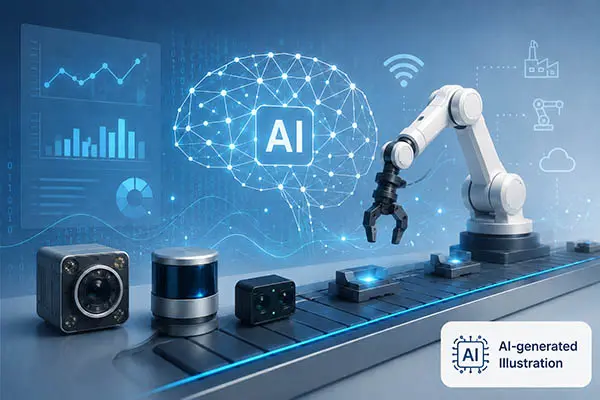
Gadgets as Part of Physical AI
Gadgets are usually smaller and less autonomous than robots or industrial systems.
Even so, many follow the basic principle of Physical AI:
Sensors capture the physical world.
Software or AI interprets the data.
The device responds physically or digitally.
Headphones adjust noise cancellation. A watch warns about unusual patterns. A robot vacuum changes its route. A camera improves an image.
Gadgets therefore bring AI directly into everyday objects.
Conclusion
Modern gadgets combine sensing, data processing and artificial intelligence within compact devices.
Sensors capture movement, sound, light, position, environmental conditions or body-related data. AI converts these measurements into functions, recommendations and automatic responses.
This makes gadgets more personal, context-aware and versatile.
Their value, however, does not depend on the number of sensors or AI features alone. Measurement quality, energy efficiency, privacy, software support and realistic interpretation of the results are equally important.
Intelligent gadgets provide a clear example of how sensors and AI are turning conventional electronic products into adaptive, context-aware systems.