All articles on sensing & AI
Articles, news and background at the intersection of sensing, measurement and AI.
World Models: How AI Learns to Understand the Physical World
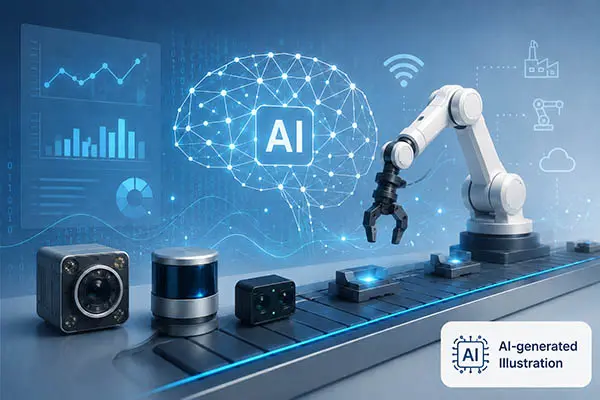
Artificial intelligence can identify objects, process language and discover complex patterns in large datasets. For machines operating in the physical world, however, pattern recognition alone is not enough. A robot should not only detect a box in front of it. It also needs to estimate how the box…
New Robotic Hands for NEO: 25 Degrees of Freedom and Tactile Sensing

1X has introduced new hands for its humanoid robot NEO. The tendon-driven system offers a total of 25 degrees of freedom. Of these, 22 are located in the fingers and palm, while three are assigned to the wrist. According to the company, the hands are designed to combine a high level of mobility…
Embedded AI: When Artificial Intelligence Becomes Part of the Device
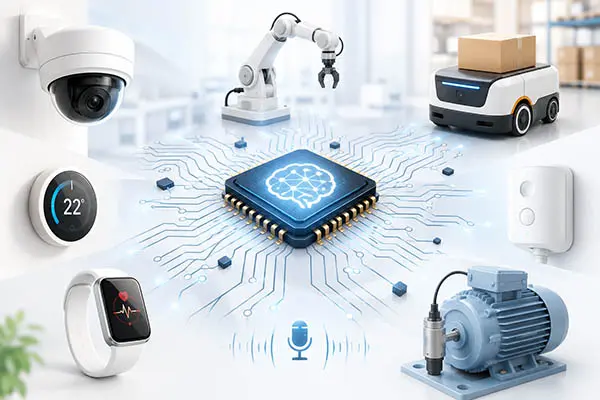
What is embedded AI? Embedded AI is the integration of artificial intelligence into a dedicated electronic device or embedded system. Instead of using AI only as external software or a centralized cloud service, the intelligence becomes part of the product itself. An embedded AI device may capture…
Machine Vision and Machine Perception: When Machines Begin to Understand Their Environment
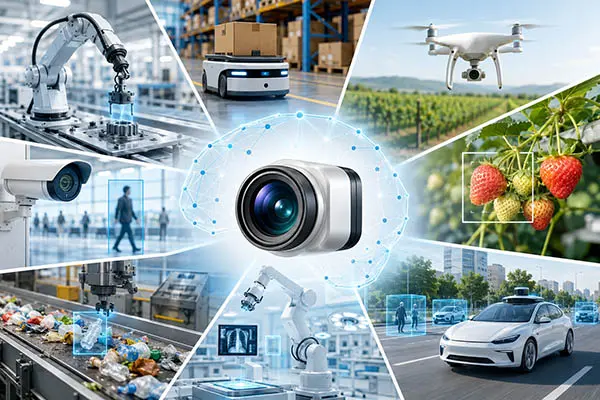
For many years, machine vision was primarily associated with factory automation. Cameras inspected components, read codes or verified that products had been assembled correctly. Today, the technology is expanding far beyond conventional industrial image processing. Modern systems do not merely…
Smart Buildings and Smart Cities: Connecting Intelligent Buildings with the Urban Ecosystem

Smart homes and smart buildings do not have to operate as isolated systems. When buildings communicate with energy networks, mobility services and municipal infrastructure, they become active components of a smart city. Sensors, edge AI and interoperable platforms provide the foundation for this…
Changes on the Robert Bosch GmbH board of management

Dr. Stefan Hartung is stepping down from his position as chairman of the board of management on June 30, 2026, and leaving the board of management at his own request and in close consultation with the shareholders. Dr. Christian Fischer will succeed him as chairman of the board of management of…
Types and Applications of Humanoid Robots
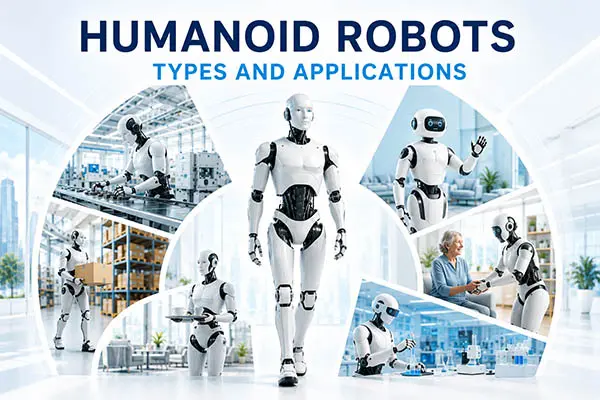
Humanoid robots are among the most visible developments at the intersection of robotics, artificial intelligence and advanced sensor technology. Their human-like shape is not simply a design choice. It is intended to help machines operate in environments originally built for people. Stairs, doors…
BCW 2026: Bosch pushes ahead with technologies for automation and robotics
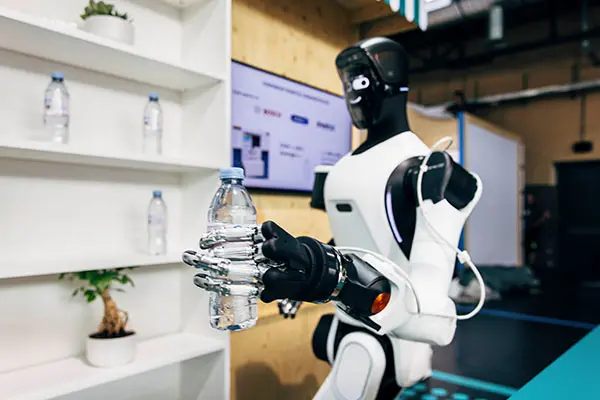
Stuttgart and Berlin, Germany – Advanced robotics and, in particular, the very dynamic growth of humanoid systems are heralding the next stage of automation. Bosch is already playing a major role in shaping this development and is actively pushing ahead with key technologies for automation and…
Wearables with Sensors and AI: From Data Trackers to Intelligent Assistance Systems
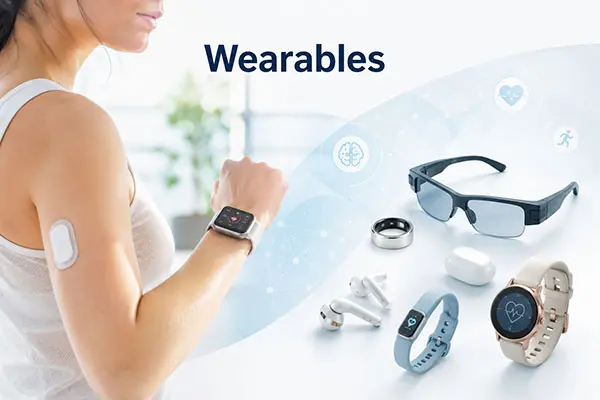
Wearable devices have evolved significantly in recent years. Simple step counters have become connected systems capable of continuously collecting, processing and, in some cases, interpreting data related to the human body. This development is driven by the combination of advanced sensors…
Sensor Fusion: Turning Individual Measurements into a Reliable View of the World
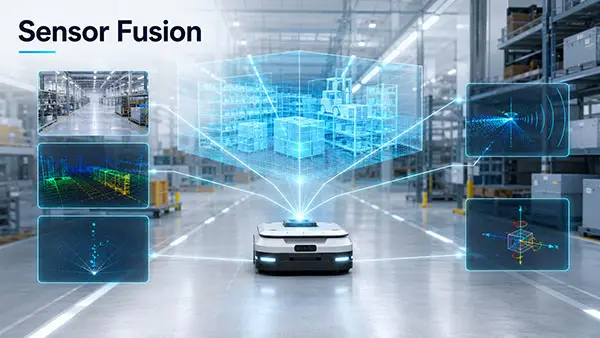
Sensors form the foundation of modern automation. Cameras identify objects, radar sensors measure distance and speed, while inertial sensors detect movement and acceleration. Each sensor provides valuable information, but every technology captures only part of the surrounding reality. Sensor fusion…
TinyML Explained: Machine Learning on Microcontrollers and Sensors
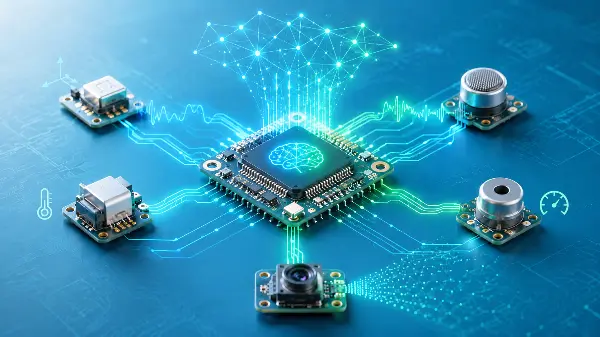
TinyML brings machine learning to small, energy-efficient devices. Instead of continuously sending sensor data to the cloud or a powerful server, data can be analyzed directly on microcontrollers, sensor platforms and compact embedded systems. This allows devices to detect patterns, classify events…
Embedded AI in Sensors: How Artificial Intelligence Operates Directly Inside Sensors
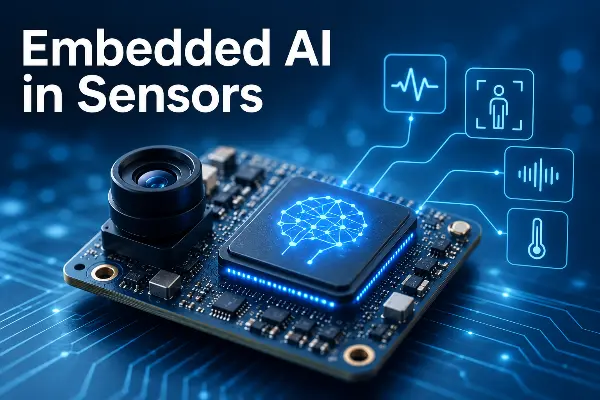
Sensors measure physical quantities such as temperature, pressure, motion, sound, light and force. Conventional sensing systems transmit these measurements to a controller, edge computer or cloud platform for further processing. Embedded AI changes this approach. Algorithms and machine-learning…