What Is Physical AI? – When Artificial Intelligence Understands the Real World
Artificial intelligence has made enormous progress in recent years. Language models answer complex questions, image generators create realistic graphics, and intelligent software helps companies automate a wide range of processes. However, a new stage of development goes far beyond the digital world: Physical AI.
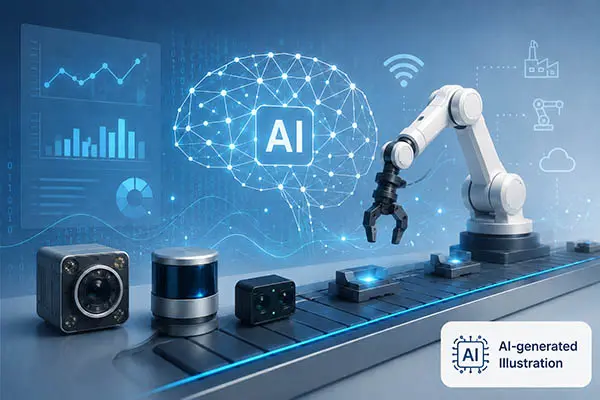
Physical AI refers to the use of artificial intelligence in physical systems—wherever machines, robots, or vehicles need to perceive and understand their environment and respond to it autonomously. Physical AI therefore forms the bridge between digital intelligence and the real world.
From Data to Decisions—and Actions
While conventional AI primarily processes digital information, Physical AI works with data from the real environment. This data may come from:
Camera systems
3D LiDAR sensors
Radar sensors
Ultrasonic sensors
Temperature, pressure, and vibration sensors
Force and torque sensors
Position and motion sensors
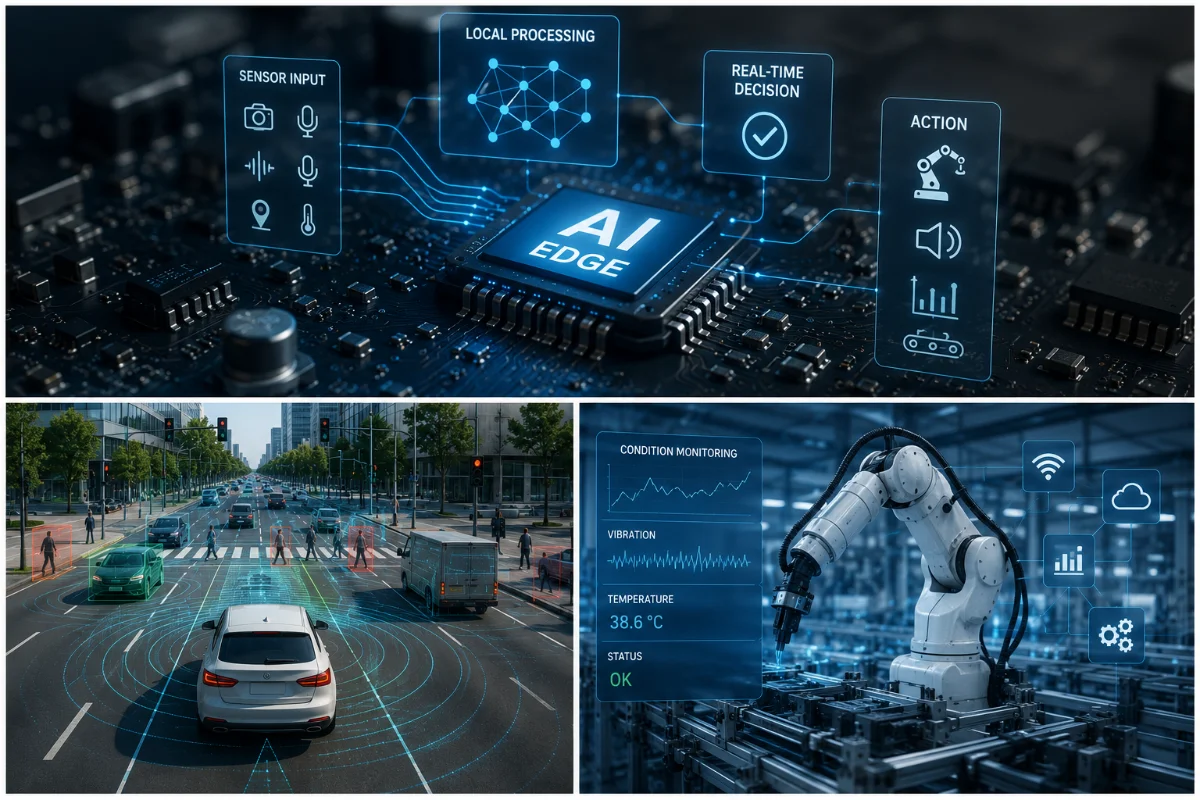
These sensors continuously provide information about the surrounding environment. AI algorithms analyze the data in real time, identify patterns, and make decisions that can then be translated directly into actions.
Physical AI would not be possible without high-performance sensor technology.
Why Sensors Are the Key
Sensors act as the sensory organs of intelligent systems. They provide the information on which an AI system bases its decisions.
For example, an autonomous robot needs to determine:
Where are the obstacles?
Which objects are moving?
Which person is approaching?
Is a workpiece positioned correctly?
Does the speed need to be adjusted?
The more accurately and reliably the sensors operate, the better the AI can assess the situation.
This is why sensor technology and artificial intelligence are becoming increasingly interconnected.
Typical Areas of Application
Physical AI is already being used in numerous industries.
Industry 4.0
Intelligent production systems independently monitor manufacturing processes, detect quality deviations, and continuously optimize workflows.
Robotics
Modern service robots and industrial robots respond flexibly to their surroundings and are increasingly able to work safely alongside people.
Autonomous Driving
Vehicles combine information from camera, radar, and LiDAR systems to understand traffic situations and make decisions autonomously.
Logistics
Autonomous mobile robots navigate through warehouses, detect obstacles, and dynamically plan their routes.
Medical Technology
AI-supported assistance systems help doctors with diagnoses or enable robots to carry out highly precise procedures.
Smart Buildings
Buildings continuously analyze occupancy, energy consumption, and environmental conditions in order to automatically improve comfort and energy efficiency.
Edge AI as an Important Building Block
A key component of Physical AI is Edge AI.
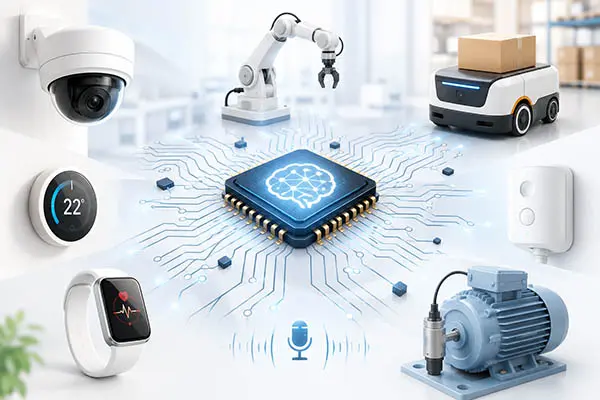
This means that AI models are executed directly on devices or machines instead of transferring all sensor data to the cloud first.
The benefits include:
Very short response times
Reduced network traffic
Improved data security
Operation without a permanent internet connection
These characteristics are particularly important in industrial automation and autonomous robotics.
Challenges
Despite significant progress, Physical AI still faces several challenges.
These include:
Processing large volumes of sensor data in real time
High reliability requirements
Functional safety
Energy efficiency in mobile systems
Robust AI models for a wide range of environments
Standardization and interoperability between different sensor systems
The combination of different sensor technologies—often referred to as sensor fusion—plays a central role in addressing these challenges.
Why Physical AI Is Becoming Increasingly Important
Several technological developments are currently accelerating the growth of Physical AI:
More powerful AI models
Faster embedded processors
More affordable sensors
Advances in robotics and automation
Growing demand for autonomous systems
Experts therefore expect Physical AI to become one of the most important drivers of innovation in industry, mobility, healthcare, and many other sectors in the coming years.
Conclusion
Physical AI combines sensor technology, artificial intelligence, and automation to create intelligent systems that can perceive and understand their surroundings and act autonomously.
While conventional AI primarily processes digital information, Physical AI enables machines to interact with the real world. Sensors act as the sensory organs of these systems and provide the foundation for intelligent decision-making.
With the rapid progress being made in sensor technology, edge computing, and artificial intelligence, Physical AI is expected to transform numerous industries in the years ahead—from industrial manufacturing and autonomous vehicles to medical technology.