Sensor Fusion
How Multiple Sensors Create a Reliable Understanding. Sensor fusion combines data from multiple sensors to capture conditions, movements and environments more accurately and reliably. This page features expert articles on multisensor systems, data fusion, IMUs, cameras, radar, LiDAR, positioning sensors, AI-based sensor data processing and real-time analysis. The focus is on applications in robotics, autonomous systems, industry, automotive, medical technology, wearables and Edge AI.
Articles on this topic
World Models: How AI Learns to Understand the Physical World
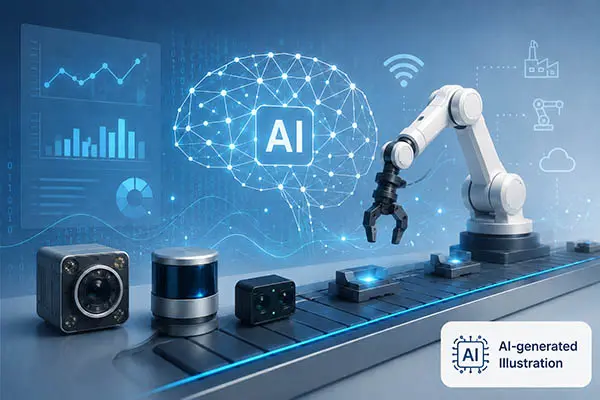
Artificial intelligence can identify objects, process language and discover complex patterns in large datasets. For machines operating in the physical world, however, pattern recognition alone is not enough. A robot should not only detect a box in front of it. It also needs to estimate how the box…
Sensor Fusion: Turning Individual Measurements into a Reliable View of the World
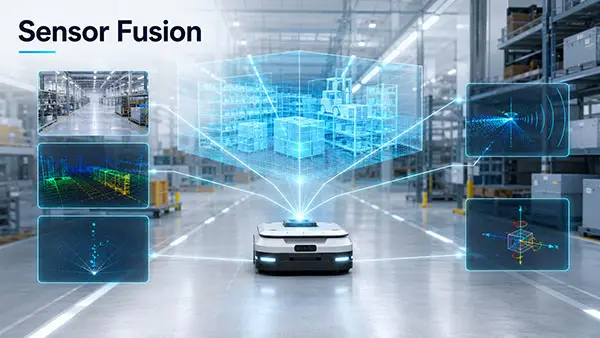
Sensors form the foundation of modern automation. Cameras identify objects, radar sensors measure distance and speed, while inertial sensors detect movement and acceleration. Each sensor provides valuable information, but every technology captures only part of the surrounding reality. Sensor fusion…
Sensors for Humanoid Robots: How Human-Like Machines Perceive Their Environment
Humanoid robots are designed around aspects of the human body and its movement capabilities. They often include a head with cameras, a movable torso, two arms, hands and legs. This structure is intended to allow them to operate in environments originally designed for people. To stand, walk, grasp objects and interact safely with humans, a humanoid robot requires many different types of sensors. These sensors monitor…
Autonomous Systems & Mobility: How Machines Perceive Their Environment and Act Independently
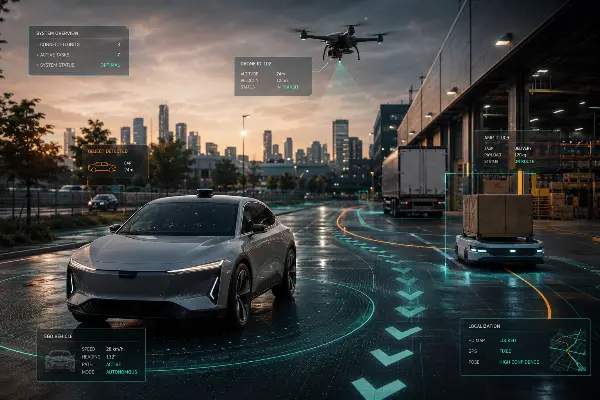
Autonomous systems can perform tasks without continuous human control. They perceive their surroundings, assess situations, make decisions and translate those decisions into actions. In mobility, the spectrum ranges from driver-assistance systems and self-driving vehicles to autonomous delivery…
Sensor Fusion in Practice: How Machines Perceive Their Environment Reliably
Sensor fusion is the combination of data from multiple sensors. The objective is to create a more accurate, robust and complete understanding of a situation than would be possible with a single sensor. Humans use this principle continuously. We orient ourselves using vision, balance, hearing and touch at the same time. Technical systems work in a similar way: cameras, radar, LiDAR, accelerometers, force sensors and…
Related topic pages
Humanoid Robots
Technologies, Applications and Latest Developments. Humanoid robots combine artificial intelligence, advanced sensors, robotics and intelligent motion systems. They can perceive their environment, interact with people and perform a growing range of tasks in manufacturing, logistics, research, service and healthcare. Explore key technologies, leading companies, real-world applications and the latest developments in humanoid robotics and Physical AI.
TinyML
Methods, Technologies and Applications. TinyML brings machine learning to compact, energy-efficient microcontrollers and embedded systems. This page features expert articles on Edge AI, embedded AI, neural networks, model optimisation, sensor analysis, low-power hardware and local data processing. The focus is on applications in IoT, industry, wearables, predictive maintenance, smart homes, robotics and intelligent sensor systems.
Wearables
Sensors, Artificial Intelligence and Smart Applications. Wearables combine advanced sensor technology, artificial intelligence and mobile data processing to create intelligent solutions for healthcare, fitness, industry, occupational safety and everyday life. This page features expert articles on smartwatches, fitness trackers, smart rings, medical wearables, sensor fusion, Edge AI, vital-sign monitoring and wearable assistance systems. The focus is on technologies, applications, market trends and current developments in intelligent body-worn devices.
Embedded AI
Intelligence Inside Devices, Sensors and Machines. Embedded AI brings artificial intelligence directly into devices, sensors and machines. Data is processed locally, patterns are detected in real time, and decisions can be made without a permanent cloud connection. This enables low latency, reduced data transmission and improved privacy. Embedded AI is used in smart sensors, cameras, robots, vehicles, wearables and industrial equipment. It is a key foundation for edge AI, physical AI and autonomous systems.