All articles on sensing & AI
Articles, news and background at the intersection of sensing, measurement and AI.
BCW 2026: Bosch pushes ahead with technologies for automation and robotics
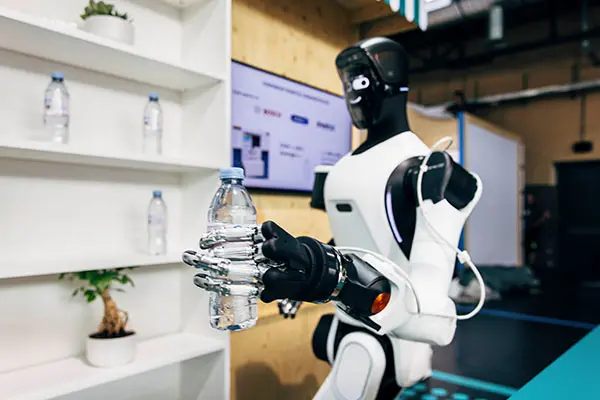
Stuttgart and Berlin, Germany – Advanced robotics and, in particular, the very dynamic growth of humanoid systems are heralding the next stage of automation. Bosch is already playing a major role in shaping this development and is actively pushing ahead with key technologies for automation and…
Wearables with Sensors and AI: From Data Trackers to Intelligent Assistance Systems
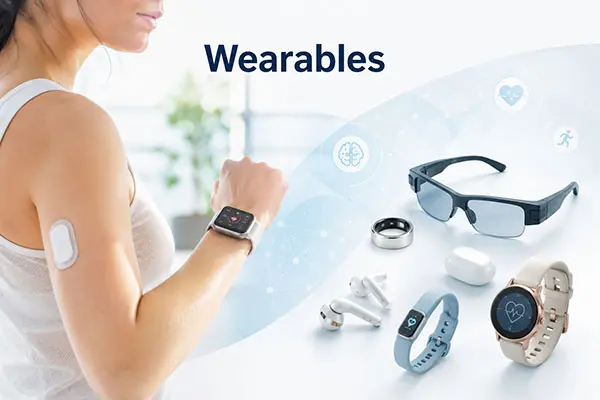
Wearable devices have evolved significantly in recent years. Simple step counters have become connected systems capable of continuously collecting, processing and, in some cases, interpreting data related to the human body. This development is driven by the combination of advanced sensors…
Sensor Fusion: Turning Individual Measurements into a Reliable View of the World
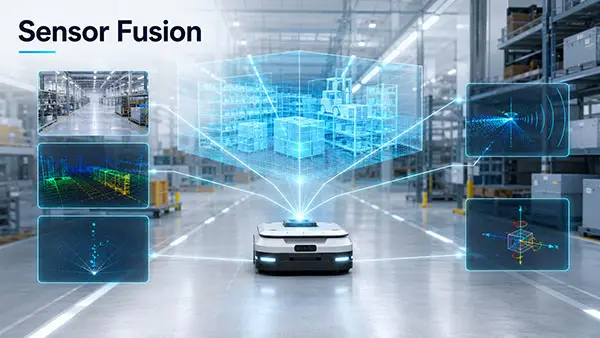
Sensors form the foundation of modern automation. Cameras identify objects, radar sensors measure distance and speed, while inertial sensors detect movement and acceleration. Each sensor provides valuable information, but every technology captures only part of the surrounding reality. Sensor fusion…
TinyML Explained: Machine Learning on Microcontrollers and Sensors
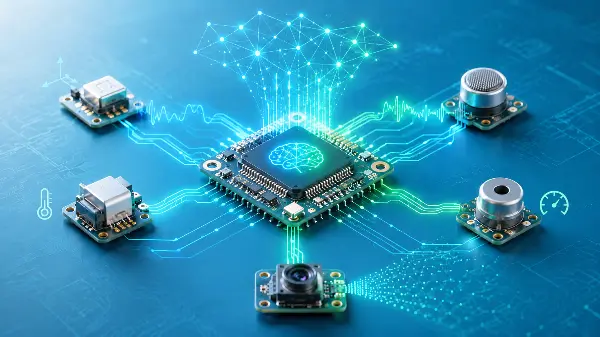
TinyML brings machine learning to small, energy-efficient devices. Instead of continuously sending sensor data to the cloud or a powerful server, data can be analyzed directly on microcontrollers, sensor platforms and compact embedded systems. This allows devices to detect patterns, classify events…
Embedded AI in Sensors: How Artificial Intelligence Operates Directly Inside Sensors
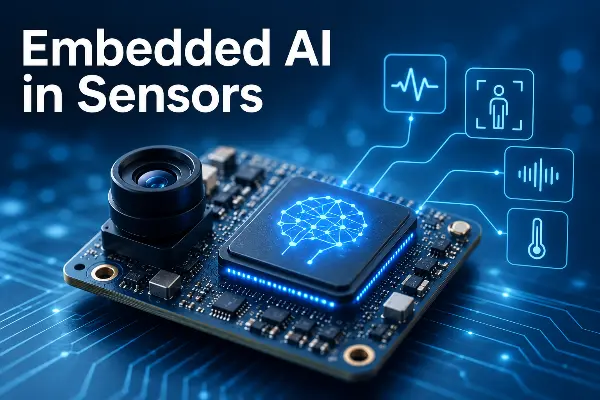
Sensors measure physical quantities such as temperature, pressure, motion, sound, light and force. Conventional sensing systems transmit these measurements to a controller, edge computer or cloud platform for further processing. Embedded AI changes this approach. Algorithms and machine-learning…
AI in Sports Technology: How Sensors, Data and Artificial Intelligence Are Transforming Training and Performance
Artificial intelligence is becoming increasingly important in sports technology. Wearables, cameras, smart training equipment and connected sports devices collect information about movement, workload and performance. AI systems analyse this data and derive patterns, recommendations or alerts. This…
Wearables: How Sensors and AI Make Body-Worn Devices Intelligent
Wearables are electronic devices worn directly on the body. They include smartwatches, fitness trackers, smart rings, intelligent glasses, sensor patches, connected clothing and specialised sports or health devices. Their main advantage is their proximity to the user. Wearables can continuously…
Smart Gadgets: How Sensors and AI Enhance Everyday Devices
Gadgets are compact technical devices designed to simplify specific tasks, provide additional information or bring new digital functions into everyday life. They include smartwatches, fitness trackers, wireless headphones, smart rings, cameras, household devices, electronic toys, wearables and…
Smart Manufacturing: How Connected Production, Sensors and AI Are Transforming Industry
Smart manufacturing describes a connected, data-driven and increasingly self-optimising production environment. Machines, sensors, software platforms and employees work together within a shared digital system. The objective is to make production processes more transparent, flexible and efficient…
Smart Homes: How Sensors, Connectivity and AI Make Buildings More Intelligent
A smart home connects sensors, devices, controllers and digital services within a shared system. Lighting, heating, shading, security, energy systems and household appliances can then be controlled automatically or through a central interface. In a simple application, a light responds to a motion…
Sensors for Humanoid Robots: How Human-Like Machines Perceive Their Environment
Humanoid robots are designed around aspects of the human body and its movement capabilities. They often include a head with cameras, a movable torso, two arms, hands and legs. This structure is intended to allow them to operate in environments originally designed for people. To stand, walk, grasp…
Robotics and Physical AI: How Intelligent Machines Perceive, Decide and Act
Robotics and artificial intelligence are becoming increasingly interconnected. Conventional robots usually perform clearly defined movements in structured environments. Systems based on Physical AI are intended to perceive their surroundings, interpret situations and adapt their behaviour when…